Winnetka's Median Home Price Depends on Which Seven Houses Closed Last Month
Pull up two real estate sites and search "Winnetka home prices" in the same week, and you'll get two different answers. In May 2026, one national data source put Winnetka's median sold price at $1.9375 million. Another, covering the same village in the same month, put it at $2.2475 million. That's a gap of more than $300,000 on a number that's supposed to describe one place.
Neither site is wrong. They're both accurately reporting a market that doesn't behave the way "median home price" usually implies.
Here's what the publicly reported data actually shows for Winnetka in 2026:
| Source | Window | Median | Other detail |
|---|---|---|---|
| Realtor.com | May 2026 | $1.9375M sold | 42 active listings, 24 days on market, 102% sale-to-list |
| Movoto | May 2026 | $2.2475M sold | 48 homes sold, 14 days on market |
| Redfin | March 2026 | $1.7M sold | 29 days on market, 4 offers average, only 7 homes sold |
| Zillow (ZHVI) | July 2026 | $1.9M average value, up 12.7% YoY | Estimated value across all homes, not a sale-price median |
Notice that Redfin's March figure is built from just seven closed sales, down from twelve the same month a year earlier. Movoto's May count is 48. That's not a rounding difference. That's two entirely different samples of a village with roughly 12,700 residents, and each one produces its own version of "the market."
This is the part most buyers miss when they anchor on a single number pulled from a portal. In a village this size, the monthly median isn't a stable statistic the way it is in a market with hundreds of closings. It's closer to a snapshot of whichever handful of homes happened to close escrow that month. Swap out two or three sales and the number moves in a way it never would in a larger suburb with a deeper pool of transactions.
That volatility matters more in Winnetka than almost anywhere else on the North Shore, because the village has spent the last three years producing some of the largest single transactions in Illinois history, all within the same handful of blocks along Sheridan Road.
Justin Ishbia, the private equity executive who is also part owner of the Phoenix Suns and in line to become majority owner of the Chicago White Sox, paid $33.7 million to assemble three adjacent lakefront lots on Sheridan Road, then filed permits for a 68,000-square-foot home expected to cost $43.7 million to build. Combined, the land and construction run close to $77 million for a single property.
A few doors down, Shiraz and Vijay Kotte bought the century-old Clement Stone Mansion at 445 Sheridan Road in 2023 for $12.3 million. Built in 1912 for socialite and real estate investor Lena P. Gilmore, the Spanish Revival estate had survived a coach house addition in 1936 and a careful restoration in 2006. The Kottes secured a demolition permit, and by August 2025 the lot sat empty. Village officials approved their replacement home in mid-2025: a 28,690-square-foot residence with a $10 million construction budget, among the largest lakefront builds in Winnetka in recent years.
Beyond those two projects, Winnetka recorded the two most expensive home sales in Illinois history within the same twelve-month stretch, both lakefront properties that closed above $30 million apiece.
Now put that back against the monthly sale counts. When a village is closing seven to twelve homes in a given month and one of them is a $30 million estate, that single transaction can single-handedly reshape a dollar-weighted average even if it barely nudges a strict median. Different data providers calculate their headline number differently, on different date ranges, with different treatment of outliers. That's why two sites can describe the same month in the same village and land $300,000 apart. It isn't an error. It's what happens when a handful of enormous transactions sit on top of a much smaller, much steadier market for ordinary family homes.
The monthly swings on a listing site are one thing. A more durable version of the same mechanism shows up in your property tax bill.
New Trier Township, which covers Winnetka along with Glencoe, Wilmette, Kenilworth, and parts of Glenview and Northfield, went through its triennial reassessment in 2025. The Cook County Assessor's Office confirmed that the township's total assessed value grew 39 percent, reflecting three years of real estate activity. Those certified values are what show up on second-installment tax bills issued in 2026.
Cook County's assessment methodology leans on recent sale prices of comparable properties. A handful of nine-figure lakefront closings don't get averaged in as isolated anomalies. They become part of the multi-year sales record the county draws on to set values across the township, and that record moves more slowly than any single listing site's monthly snapshot, which is exactly why it's harder to see coming and harder to argue with once it lands. A homeowner three blocks inland from Sheridan Road, with no lake view and no interest in a teardown, can still watch their reassessment notice reflect a market that was, in real terms, being driven by transactions they had nothing to do with.
If you're a Winnetka homeowner and your recent reassessment felt disconnected from what your home would actually fetch, this is worth understanding before you decide whether to appeal. New Trier Township's own property valuation page lays out how the Assessor's Office calculates fair market value and outlines the process for filing a formal appeal if your property's characteristics or comparable sales don't line up with your notice.
The megamansion tier that has been distorting Winnetka's numbers is also the reason the village passed some of its most consequential zoning changes in years. Ishbia's project, which included leveling sections of the lakefront bluff to make way for construction, prompted the Village Council to adopt a bluff protection ordinance in February 2024. The rule sets a required setback from the toe of the bluff or 50 feet from Lake Michigan's ordinary high water mark, whichever sits farther from the water, a change from the previous practice of measuring from the water's edge itself. The village also passed a separate ordinance limiting the consolidation of adjacent lakefront lots, the same maneuver Ishbia used to assemble his site in the first place.
A group of lakefront homeowners sued the village over the bluff ordinance in 2024, arguing the restrictions amount to an uncompensated taking of property value. A federal judge dismissed the lawsuit's sole federal claim in October 2025, ruling it was too early to claim damages since none of the plaintiffs had yet been denied a permit under the new rules. The homeowners filed an amended complaint shortly after, so the underlying property-value dispute remains open as of this writing. You can read the ordinance's actual language on the Village of Winnetka's lakefront regulations page.
What this means going forward is straightforward even if the litigation isn't: the specific move that generated Winnetka's most extreme recent sale prices, buying up several adjoining lakefront parcels to build one enormous home, is now structurally harder to execute than it was three years ago. That doesn't erase the reassessment already baked into current tax bills, but it does suggest the pipeline of nine-figure outlier transactions won't necessarily keep refilling itself at the same pace.
If you're comparing Winnetka to Wilmette or Glenview using a median price you found on a portal, ask which window that number covers and how many sales it's built from before you treat it as gospel. A median built from seven transactions in a single month is a different kind of number than one built from seventy.
For a typical buyer targeting the inland neighborhoods, East Winnetka, Hubbard Woods, or Indian Hill, the more useful reference point isn't the headline that happened to be trending the week you looked. Across the reported 2026 data, well-maintained single-family homes in that range have been trading with 24 to 29 days on market and multiple competing offers, a pattern consistent enough across sources to actually be useful. That's the market you're bidding into. The Sheridan Road transactions are real, and they're reshaping the village's tax base and its zoning code, but they are not the comp for the house you're about to write an offer on.
Does the megamansion boom affect my property tax bill even if I'm nowhere near the lake? It can. The reassessment cycle pools sales data across the entire township over a three-year window, so unusually large transactions can influence the comparable sales record used to value properties elsewhere in Winnetka, even without a direct comparison to your specific home.
Is the bluff ordinance dispute settled? Not entirely. The federal judge's October 2025 ruling dismissed the sole federal claim, but the plaintiffs filed an amended complaint afterward, and the underlying question of compensation for lost buildable land remains unresolved.
Should I ignore the "median price" headline entirely? Not ignore it, just read it with the sample size in mind. A median from a month with a handful of closings tells you less than one built from a larger pool, and in Winnetka specifically, it's worth checking whether a lakefront outlier sale fell inside the window you're looking at.
Winnetka's numbers are real. They're just built from a market that isn't one thing. If you're trying to figure out what your budget actually buys here, or what your home is worth against a backdrop this uneven, The Keki Cannon Team can walk you through the comps that actually apply to your situation. Let's connect.
Highland Park
What Highland Park homeowners and buyers should know about ravine properties, setbacks, maintenance, and the rules that protect them.
Glenview
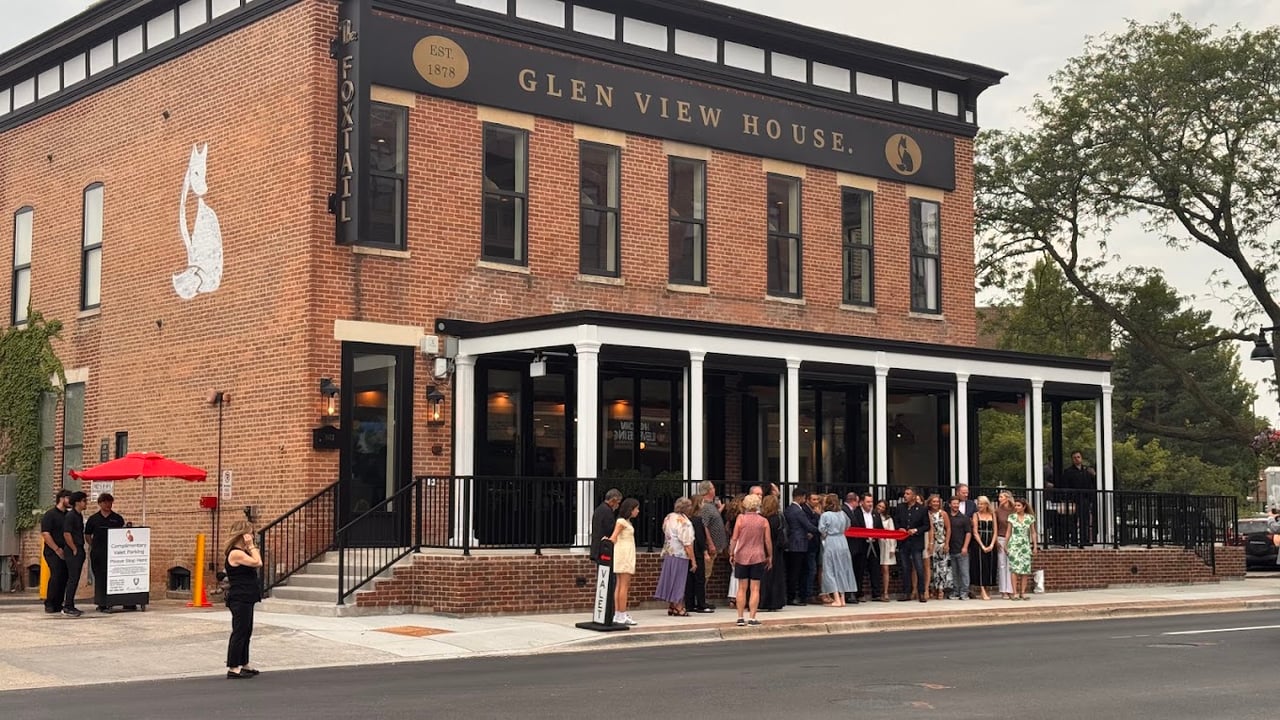
New restaurants, new residents and a packed September calendar are changing the feel of downtown Glenview.
Our deep local roots create a complete knowledge base—covering schools, public amenities, and local culture—allowing us to meet every client's needs with absolute precision.
Get In Touch With Our Team To Learn More